
Provider API
Provider Access Application Programming Interface
This specific type of API allows data sharing between impacted payers and providers. However, payers are required to give patients information in plain language to explain the benefits of the API, and patients must have the ability to opt out. The data to be shared includes:
- Individual claims and encounter data (excluding provider remittances and enrollee cost-sharing information).
- US Core Data for Interoperability (USCDI) data classes and elements (such as clinical notes, test results, and demographics).
- Specific prior authorization information (excluding those for drugs).
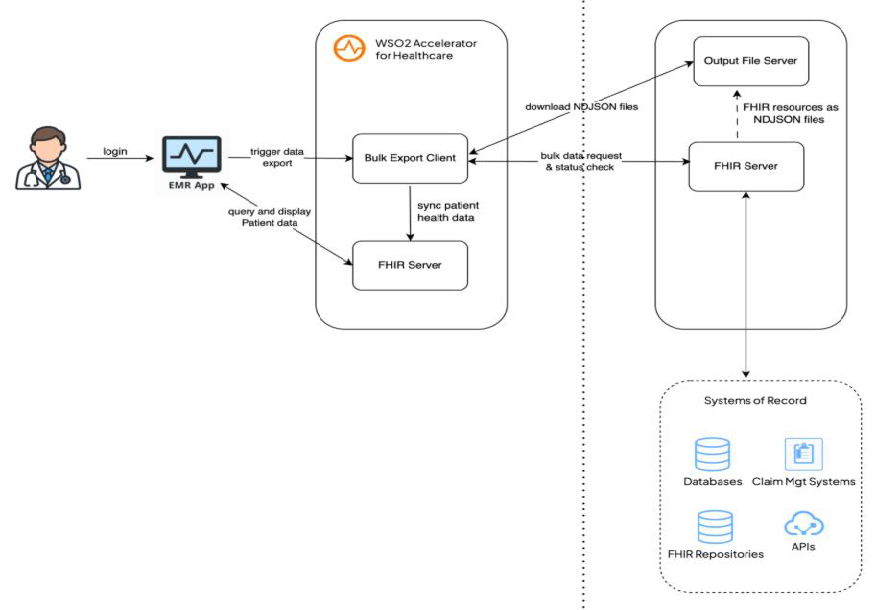
With this API, impacted payers must make this information available to a patient’s in-network providers, with the goal being to increase care coordination and use of a value-based payment model. Below is a diagram of the API’s workflow.
How Will This Benefit Providers?
Provider Access APIs offer many advantages for healthcare providers including:
- Because of the increased interoperability offered by this API, providers will have real-time access to their patients’ most up-to-date data, which will help reduce administrative burden and improve data accuracy.
- Data sharing can lead to better coordination of care between a patient’s various providers, making things like the prior authorization process more accurate and quicker. This means that a patient will be able to get the appropriate care and services with less hassle and more efficiency, which is good for both patient and provider.
- The use of the Provider Access API is very simple, only requiring the provider to log into whatever EMR application their health system uses to access their patient’s medical records and history. The provider will not have to set up any additional apps or systems to access the information made available by the Provider Access API and instead can simply continue using the EMR application that they are already acquainted with.
In short, the provider will reap all the benefits of the Provider Access API without having to make any changes on their end as all the burden is on the Impacted Payers and the software/system components working behind the scenes.