Application Programming Interface (API)
What Is an API?
- API stands for Application Programming Interface.
- It is a tool that allows two different computer systems to communicate with each other, using a set of definitions and protocols.
- APIs make it possible for data to move safely and quickly between systems.
How do API’s work?
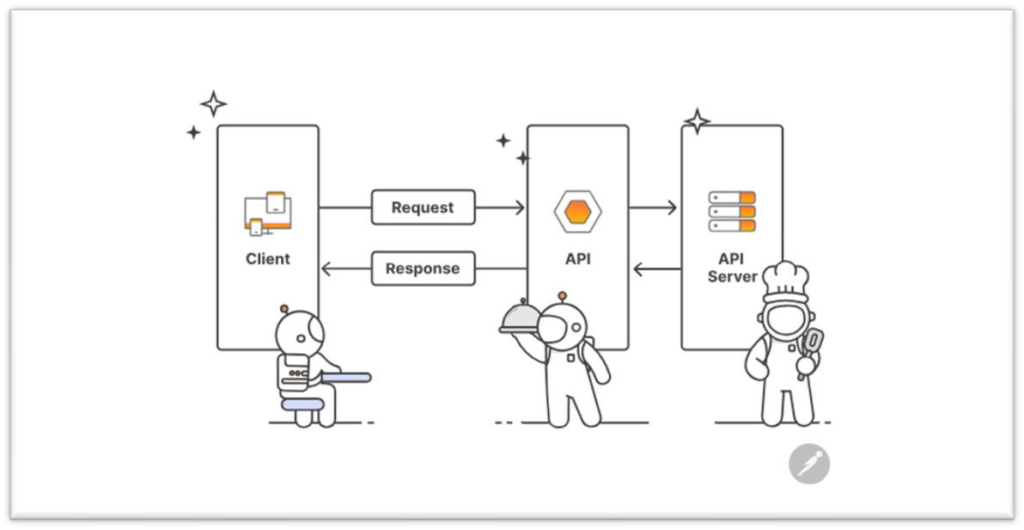
An API (Application Programming Interface) allows two systems to talk to each other. It follows a client-server model where:
- The client asks for information, and the server provides the information.
Think of an API like a messenger:
- One system sends a request for information through an API.
- The API delivers that request to another system that has data.
- That system sends back a response in a structured format.
Example of an API: Weather App
When you open a weather app, it uses an API to connect with a weather data service that stores up to date information. The app sends a request through the API asking for the current conditions in your area and the weather service processes the request and returns the information to display on your screen.
How it works:
- You open the weather app (client).
- The app sends a request through an API asking, “What’s the weather like in Detroit?”
- The weather service system (server) receives the request and gathers the appropriate data.
- The server sends the weather information back through the API.
- The app displays the weather information, for example “80°F and sunny.”