
Interoperability
Diagram showing interoperability flow
What is interoperability?
According to the Healthcare Information and Management Systems Society (HIMSS), interoperability means that different information systems, devices, and applications can work together to share and use data. This cooperation happens smoothly within and across different organizations, regions, and countries, ensuring that information is easily accessible and can help improve the health of people everywhere.
This ability of systems allows for data to be accessed and shared appropriately and securely across different points of care such as hospitals, community organizations that provide care for the social determinants of health[1], and specialists that help with specific care.
[1] Social Determinants of Health are non-medical factors that affect health outcomes. Social Determinants of Health | Public Health Gateway | CDC
Why is it important?
Interoperability already exists within certain systems of healthcare such as doctors, hospitals and pharmacies. By expanding and bettering the interoperability of healthcare systems, not only does it increase efficiency but affordability of services.
Diagram showing benefits of healthcare interoperability.
Benefits of Interoperability
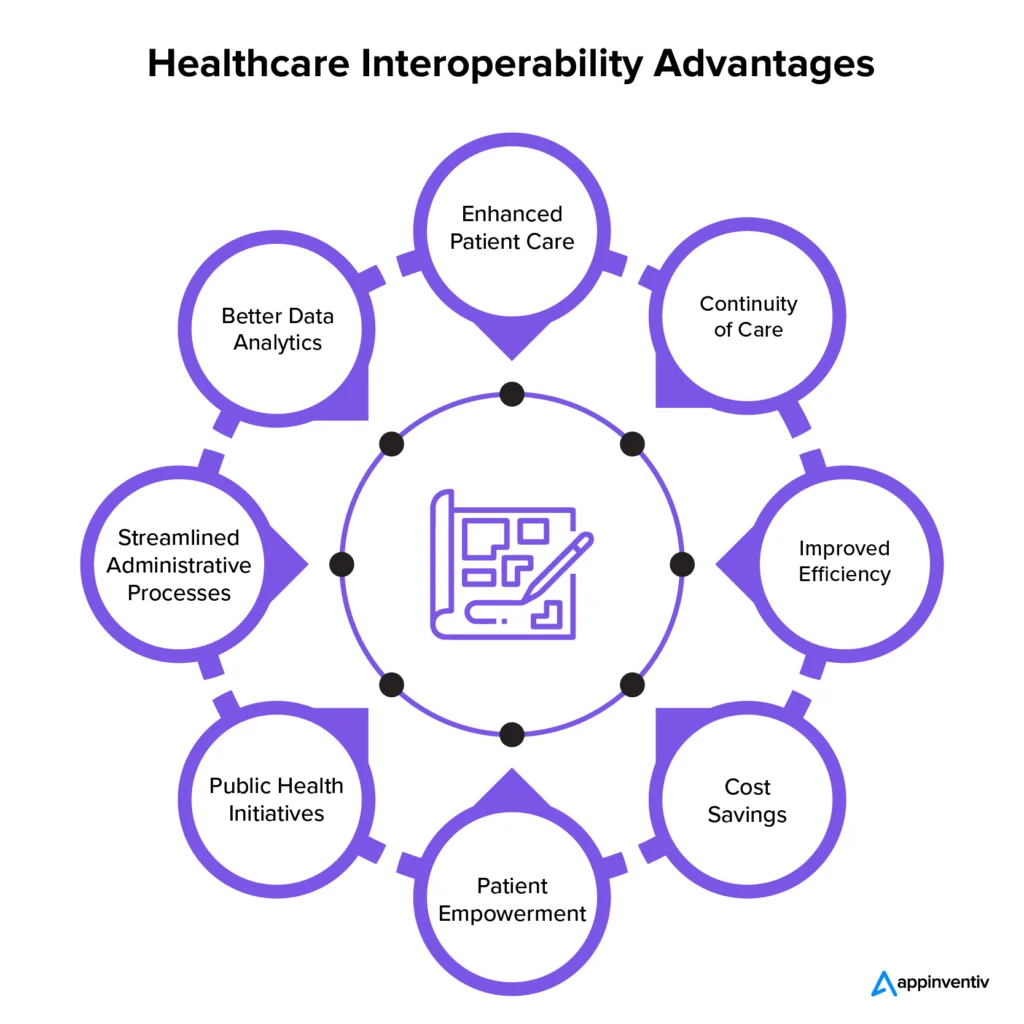
- Care coordination: Care coordination often involves a variety of stakeholders, including patients, caregivers and care teams across settings in the management of a patient’s health. This process requires data movement across platforms and among service providers in real time to successfully manage care.
- Improving business and administrative processes: Having access to health information can eliminate time-consuming tasks within a health system, including processing of intake information, coordination across care teams, and reporting patients’ needs.
- Increased patient safety and satisfaction: It is important to have a full picture of a patient’s health through patient’s medical history, preferences, and past encounters. This can help avoid duplicate testing, reduce adverse events, inform care decisions, and conduct appropriate follow-up.
- Value-based care: Population-level data analysis is crucial for health systems to manage high-risk patient populations and coordinate care needs, enabling better risk analysis and cost-effective care. Incorporating non-traditional health data, such as social determinants of health, into patient records allows health systems to proactively identify health risks and work towards positive outcomes.